A mini split is a sealed system — it should never 'run low' on refrigerant unless there's a leak. So when your unit isn't cooling or heating well because the charge is down, the real job isn't topping it off; it's finding the leak, fixing it, and recharging correctly. That's how you get a lasting repair.
This is the single most important thing to understand about refrigerant problems: refrigerant is not fuel. It doesn't get consumed. In a healthy sealed system the same charge circulates for the life of the equipment. If your mini split is low, refrigerant is escaping somewhere — a loose flare fitting, a corroded coil, a cracked line, or a bad valve. A technician who simply adds more refrigerant and leaves is selling you a few weeks of relief and a repeat bill. We find and repair the leak first.
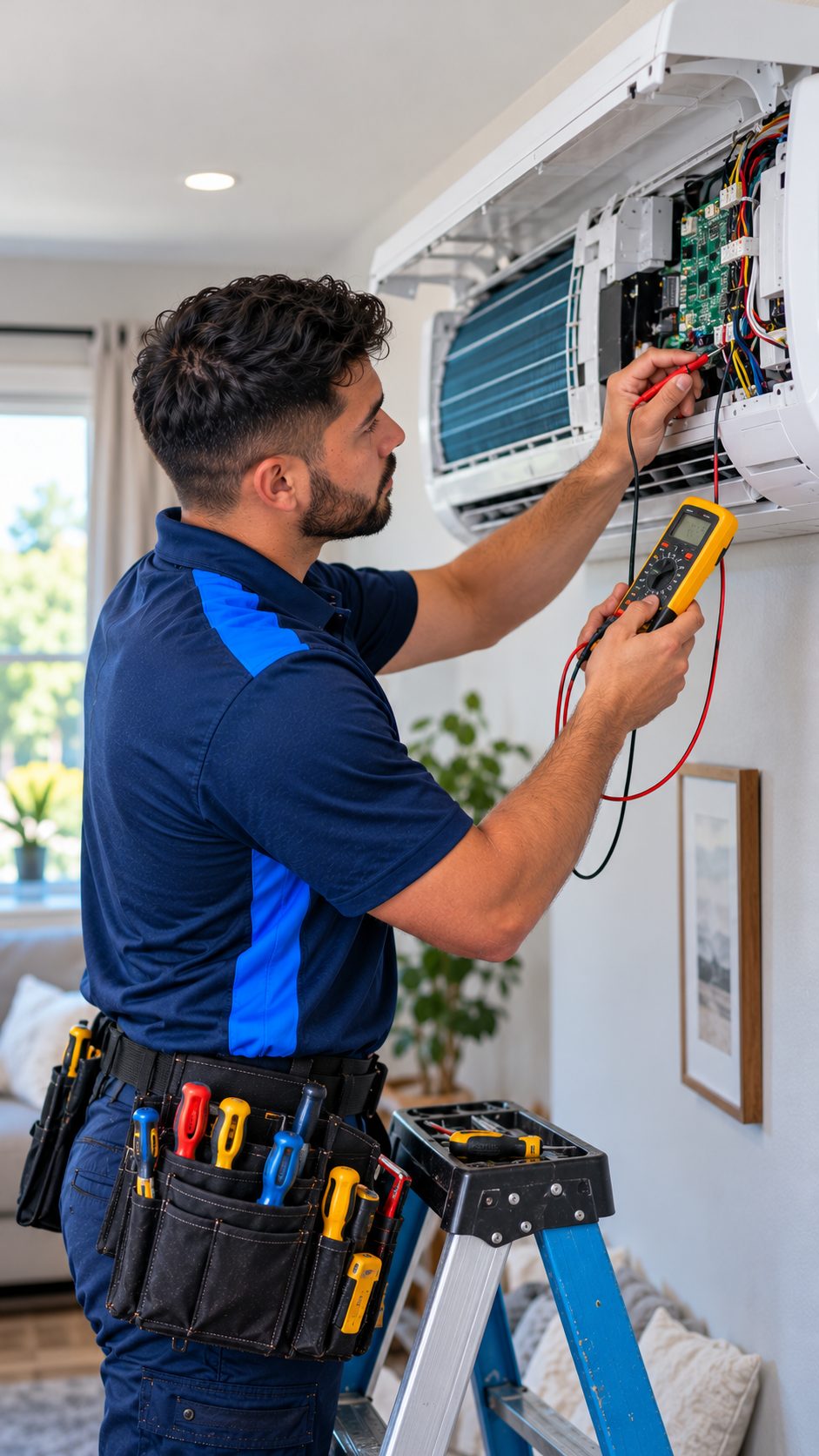
Our refrigerant service follows a proper sequence:
Charging by exact weight — not by guesswork — is what separates a reliable repair from a comeback.
We work with all the refrigerants used in mini splits, including modern R-410A and R-32 and older R-22 systems. If you have an aging R-22 unit with a leak, we'll be honest about whether a repair is worth it or whether replacement makes more sense, since R-22 is phased out and expensive. Either way, we handle all refrigerant responsibly and per EPA regulations.
Tell us what's going on with your mini split and a New Jersey specialist will get back to you within the hour. For urgent issues, call 862-640-1384 any time.
Because it's leaking. Mini splits are sealed systems — refrigerant isn't consumed and never needs 'topping off' in a healthy unit. A low charge always means there's a leak somewhere, most often at a flare fitting, a coil, or along the line set. The leak must be repaired, not just refilled.
We don't recommend it. Recharging without repairing the leak means the refrigerant escapes again within weeks, you pay repeatedly, and losing refrigerant repeatedly can damage the compressor and harms the environment. We find and fix the leak so the recharge lasts.
We use a combination of electronic leak detectors, nitrogen pressure testing, and bubble solution to pinpoint the exact leak location. Flare fittings and coils are the most common sources. Once located, we repair it properly before recharging.
Modern refrigerants like R-410A and R-32 are generally safe in normal household amounts, but a leak means your system can't cool or heat properly, runs inefficiently, and can eventually damage the compressor. It should be repaired promptly. We handle all refrigerant per EPA safety rules.
Yes, we can repair R-22 systems, but R-22 is phased out and increasingly expensive. If an older R-22 unit has a significant leak, we'll give you honest numbers on repair versus replacement so you can make the smart financial choice.
Same-day diagnosis and repair on every brand of ductless mini split, anywhere in New Jersey. Call now or request a free quote online.